Who knows my name?

I’d like to tell you about the most impressive person I’ve ever met.

His name is Chomno and he lives in Poipet, Cambodia. His story, if it was to be shared, would have Hollywood scriptwriters reaching for their pens.

They’d hear of how he lived through the horror of the Khmer Rouge regime, escaping across the border into the refugee camps of Thailand. He met his wife there and, as they married, bombs rained on to the camp ruining the already simple celebration. When peace returned to his homeland they returned to the capital and began to rebuild their lives, but a trip to the border town of Poipet found him being called by God to give up everything and move there to set up a charity to serve the poor and destitute.

That’s precisely what he did, going with no great plan or financial backers, just obediently answering a call and looking to God to provide what was needed.

As I sat in the Cambodia Hope Organisation’s centre listening to Chomno’s story, after a day of seeing the extraordinary work that his organisation does, I knew that I was meeting with a hero of the faith. We joked with him about writing a book of his story, but the reality is that he’s too busy doing what he’s been called to do to worry about personal profile or who knows his name or what he’s done.

In the modern western world of constant updates, followers and selfies, it challenges me to ask ‘What if no one knew my name?’

What if the only person who saw who I was and what I do was Jesus. Would that be enough?

How often to I fall into the trap of looking for recognition in all of the wrong places? I find myself caring a little more than I should (or like to admit) about who saw/heard/read/liked what I have done.
FollowFor centuries, people have followed God’s call to serve him in the unknown or forgotten corners of the world, or the unseen and unglamorous communities of our cities. Most have gone in quiet and humble ways, counting the cost rather than the Twitter followers. The majority have never had biographies written about them, or had anyone hear of their work. No one except the only one whose opinion really counts.

Of course it’s great to be encouraged and cheered on, but what if the only chorus of praise was from heaven? What if the only ‘well done’ was from the Father? Would that be enough to keep me going? Would I keep faithfully serving at whatever I have been called to if the only eyes to see it were those of Jesus?

This week I am reminding myself to truly have that audience of one. To train my gaze away from the lure of worldly praise and focus instead on what pleases the one I get to call Abba.
The Masterpiece Within

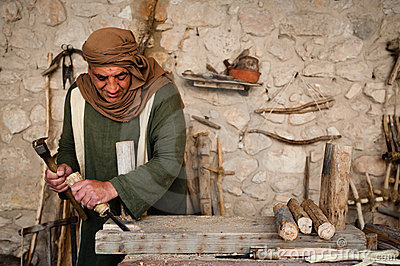
ancient-carpenter-19515233Sometimes I think we forget the part of Jesus’ life that came before his ministry, the time he spent as a carpenter.  We know that it happened but, because it’s not the part that’s written down, we ignore it – it’s a minor footnote in his story. But it’s a part that intrigues me.

I love to see the work of artists and artisans. Watching people who can weave together intricate detail, original creativity and incredible skill to make something beautiful is something that fills me with wonder. It makes total sense to me that if Jesus was going to put in some time on earth before his ministry, it would be in a creative field. He who flung the stars into space, moulded each petal and picked out the colour palette for the oceans would surely have made some exquisite woodwork.

In our mass produced systems of today we forget that every item used in the world Jesus inhabited was handmade. Bespoke furniture would be the norm. Everything individually made to order. Time, care and attention to detail in every piece, made by a skilled craftsman. Come with me for a few moments into Jesus’ workshop. With an artist’s eye he looks at a piece of wood, rough and unevenly shaped and sees the masterpiece within. He runs his hand over a piece of timber and knows what it will take to chisel away the excess, carve out a beautiful shape and sand it to smooth perfection. He knows what type of wood is best for each different purpose. He has to hand a vast array of utensils and tools, each for a different part of the process and can use each one deftly to achieve just the right outcome and effect. After many hours of labour and patience, leaving no rough edge untended, he has his prize.

I believe that he sees me the same way.

And you.

He looks at our uneven temperament and the character traits that are bent out of shape. He sees the rough, knotted surfaces of our daily lives, the selfishness, pride and impatience, the judgement, laziness and lack of compassion, and rather than throw us on the scrap heap, he sets to work.

Because he can see the masterpiece within.

There are days I like to think I’m nearly there, that all I really need is some sanding down, smoothing out the final few bumps. I think that we’ve been working on this for a while now, Jesus and I, and I’m looking pretty good.

And then he reaches for the hammer and chisel and I know that there’s another lump to be knocked off, and it’s going to be painful and uncomfortable.

We go over the same area of stubborn resistance, working where I thought we were finished, to chip away once more at the parts that need attention. And it is indeed a process that humbles and chastens me.

But I let him work away because I trust myself to the master who can see what needs to be done. I am being fashioned into the shape that he wants me to be, regardless of how long it takes.

And as I sit in his workshop, I’m reminded that when I look at others and find myself considering all of their rough edges, their flaws and failings, that Jesus sees a masterpiece in them too.

We are all a work in progress – and the craftsman hasn’t set down his tools.

I can and I will

**GBBO Spoiler alert**

I’ll admit it now – I cried at the end of the Bake Off final this year.

But then so did Mary Berry, so I figure I’m in pretty good company.

I didn’t cry because of my sadness that it’s all over for another year, nor because of any terrible injustice over the result – because I thought that Paul and Mary got it spot on.

It was what Nadia said at the end that got me, as she stood holding her winner’s trophy.

“I am never going to put boundaries on myself ever again. I’m never going to say I can’t do it. I’m never going to say maybe. I’m never going to say I don’t think I can. I can and I will.”

What made her triumph all the more beautiful was the obvious joy and pride of her family who were there to support her. They had clearly been cheering her every step of the way, encouraging her when she was down, believing in her when she struggled to believe in herself and spurring her forward right to the end.

There’s extraordinary power in encouragement.

I am scared of heights, and have been ever since I was a little girl.

But I have been to the top of the Eiffel Tower in Paris, the Sky Tower in Auckland and have crossed the Carrick-a-Rede Rope Bridge on the north Antrim coast of Northern Ireland.

How has this been possible? In every case my knees were like jelly and I had that fearful quiver in my voice when I tried to speak. But on each occasion I had a friend with me to hold my hand (literally), tell me I could, or simply not take no for an answer.

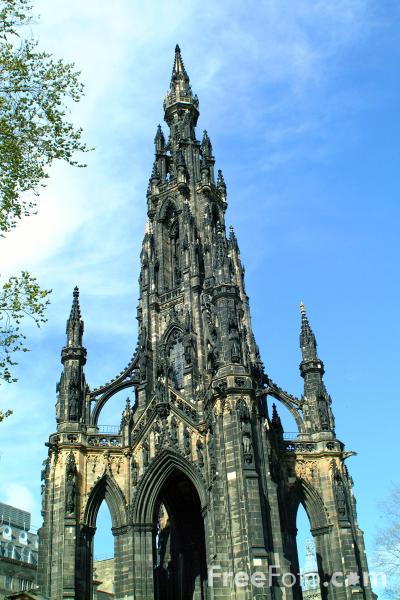
On one occasion I decided to be brave and head to the top of the Scott Monument in Edinburgh – on my own. I made it up to the main part of the monument where you can walk around the edge and get such a wonderful view of the city. Scott monumentHowever there’s another bit you can ascend, in the spire-like part of the structure. I made it about three steps up when my fear stopped me and turned me around. I decided I had been brave enough for one day.

The Scott Monument is around a quarter of the height of the Eiffel Tower and about a third of the Sky Tower (very shonky maths – please don’t look it up), so why could I not get to the top?

Because I was alone.

No encouragement, no hand-holding.

No one pushing me on, telling me I could.

And it made all the difference.

Encouragement is a powerful gift.

The Acts of the Apostles and letters of the New Testament are peppered throughout with calls for us to bring encouragement to one another. Why is it so important?

Because without it we falter.

We look around at what we’re trying to achieve and wonder who the heck we think we are. We see the heights we’re trying to scale, the distance we’re reaching for, the giants we’re facing and we feel the fear.

Or perhaps we look back at the road we’ve been walking and feel disappointed with how slow the journey has been. We are tempted to give up, to just sit down where we are and call it good enough.

At each of these places encouragement makes all the difference.

It lifts us back on our feet again and sets us on our way or gives us the foot up that we need to reach the heights we’re stretching for. Encouragement brings boldness and bravery and drowns out the voice of fear. When we’ve compared ourselves to other brighter, shinier people and told ourselves that there’s no point trying, encouragement reminds us that our contribution is unique and the world needs to hear it.

Encouragement lifts our heads when they are down and strengthens our resolve when it has weakened.

It enables us to say, “I can and I will.”

Who can you encourage today?

Who needs you to be their cheerleader?

And who would like to come and hold my hand, to the very top of the Scott Monument?

All the vain things

I’ll admit it – I am easily charmed.

Fluffy bunnies, smooth advertising slogans, a well-made slice of cake, a fabulous shade of lipstick – it really doesn’t take much to win me over. If it is shiny and wonderful then I would like a piece of it.

Neither am I one for self-discipline and so I will readily capitulate to a variety of these temptations on an almost daily basis.

I remember when fragranced ironing water first came on the market. I’m sure there’s a proper name for it, but it’s basically nice smelling water to put in your steam iron instead of the regular stuff from the tap. Watching the tv advert I thought it was utterly absurd. The clothes were already clean from the washing machine, why on earth did they need extra smelly water?!

Fast forward a few days and I found myself wandering past the ‘new product special offer’ section in the supermarket and began to have a different conversation with myself.

You know sometimes the clothes may be clean, but there is still that slightly stale smell when you iron them. Perhaps you should just try it. It might be lovely. Go on, pop the bottle in the trolley. There, that was easy.

I travelled another few aisles before having another, more stern conversation with myself and returned the ironing water back to the shelf.

Please hear me – if you are a person with ironing water in your cupboard, there is no judgement here. This was one tiny luxury that I denied myself on one miraculous day. My home is filled with many other charming and unnecessary things that I have scooped up and brought home, and if you ever came and inspected my belongings (please promise me you won’t ever do that) you would be horrified by the amount of stuff that I couldn’t possibly resist.

It’s because of these quirks (surely not flaws) in my character that I’ve always found it a challenge to sing the line in the famous hymn, “All the vain things that charm me most, I sacrifice them to his blood.”

Ouch.

shoppingI think we’ve established that there are many vain things in my life and I’ll confess right now that they charm me a great deal. And so I would sing that line with a slight grimace and promise the Lord that I would, yes I definitely would (or at least I’d try to) purge myself of these charms and live a more monastic and holy life.

Until recently I had never made a connection between these lines and the first two lines of this same verse.

Forbid it Lord, that I should boast

Save in the death of Christ my God.

All the vain things that charm me most

I sacrifice them to his blood.

Yes indeed forbid it Lord that I should boast, for I am British and that is most unbecoming. What’s more, as a member of a Celtic nation, boasting may see me excommunicated from my people. So Lord, I can sing this line quite easily, because boasting is vulgar and I don’t do it, really.

And then, just recently, the Lord whispered something to me in response.

What about the vain things?

Yes I know, the vain things! I’m sacrificing them.

Ok I’m not. But I’m trying.

Sometimes.

They are how you boast.

Not with words, but with things.

Everything you take more pride in, show more joy towards than me. Every time you are more concerned with how you look, or what they’ll think than you are with what I’m saying to you. When you take more care over everything external than you do with the internal, then you are boasting in something other than me.

Ah. I see it now.

I see the time and effort I put into things that have no eternal consequence. The care and attention I give to parts of my life that do not truly matter.

Those things are not necessarily wrong in and of themselves, and many of them bring me delight and pleasure. But when they take up too much space in my life and my thoughts then something is out of balance.

And so from now on I will sing this verse recognising that I boast every day in things other than Jesus and that he asks me to sacrifice my vain and shiny trinkets so that his radiance might be seen more clearly, by me and through me.

Forbid it Lord, that I should boast

Save in the death of Christ my God.

All the vain things that charm me most

I sacrifice them to his blood.

Whatever is lovely

Earlier this year I attended a workshop during a conference where we were encouraged to think about our strengths and passions through a series of activities. One exercise involved looking at a range of postcards, each of which named a strength, and picking the one that resonated most with us and then reflecting on some questions. I selected ‘appreciation of excellence and beauty’ and sat down to ponder – and it’s something I’ve been mulling ever since. How is this a strength? What is it good for? Encouragement for people who have done something excellent or beautiful? I hope so. But is there more to it than that?

Recently I was reminded of some verses that I love, but have now come to see with fresh eyes. “Whatever is true, whatever is noble, whatever is right, whatever is pure, whatever is lovely, whatever is admirable – if anything is excellent or praiseworthy – think about such things.” Philippians 4

The surprising and joyful thing that I found afresh in theses verses is the second half of the list. Things that are true, noble, right and pure would seem to be obvious exhortations for us as God’s people, because those seem holy, righteous and all very Christian. But the fact that we are also encouraged to focus on what is lovely, admirable, excellent or praiseworthy, with equal measure to the first half of the list, means that there must be some holiness and righteousness baked right in to those things too, right?

Maybe it seems very obvious to you reading this, and I am just thoroughly dense, but until recently I hadn’t fully appreciated the true value in loveliness. I knew that God was the creator who made all things good and beautiful and so of course, seeing his creation made me feel connected to him and brought worship to my soul. But there’s something more to it than that. When I see something lovely or excellent, not just in nature but also man-made, there is a specific type of joy that rises in me, a declaration of ‘yes’ that waters my parched being in a particular way. Admiring an extraordinary painting, an exquisitely made dress or a beautiful building evokes an awe-filled wonder. Somehow, however, I had the impression that this reaction was, dare I say, shallow and that appreciating something simply because of its loveliness was not very worthy, indeed perhaps a little too worldly.

I’ve started to realise how wrong I was. If I’m made in the image of a creator God, who took delight in all kinds of creativity, who did everything with excellence, why would I not be wired to find joy and wonder in what’s around me? Why would those things not bring me incredible pleasure? Setting my attention on what is praiseworthy unlocks something of the Father’s heart in me and for me.

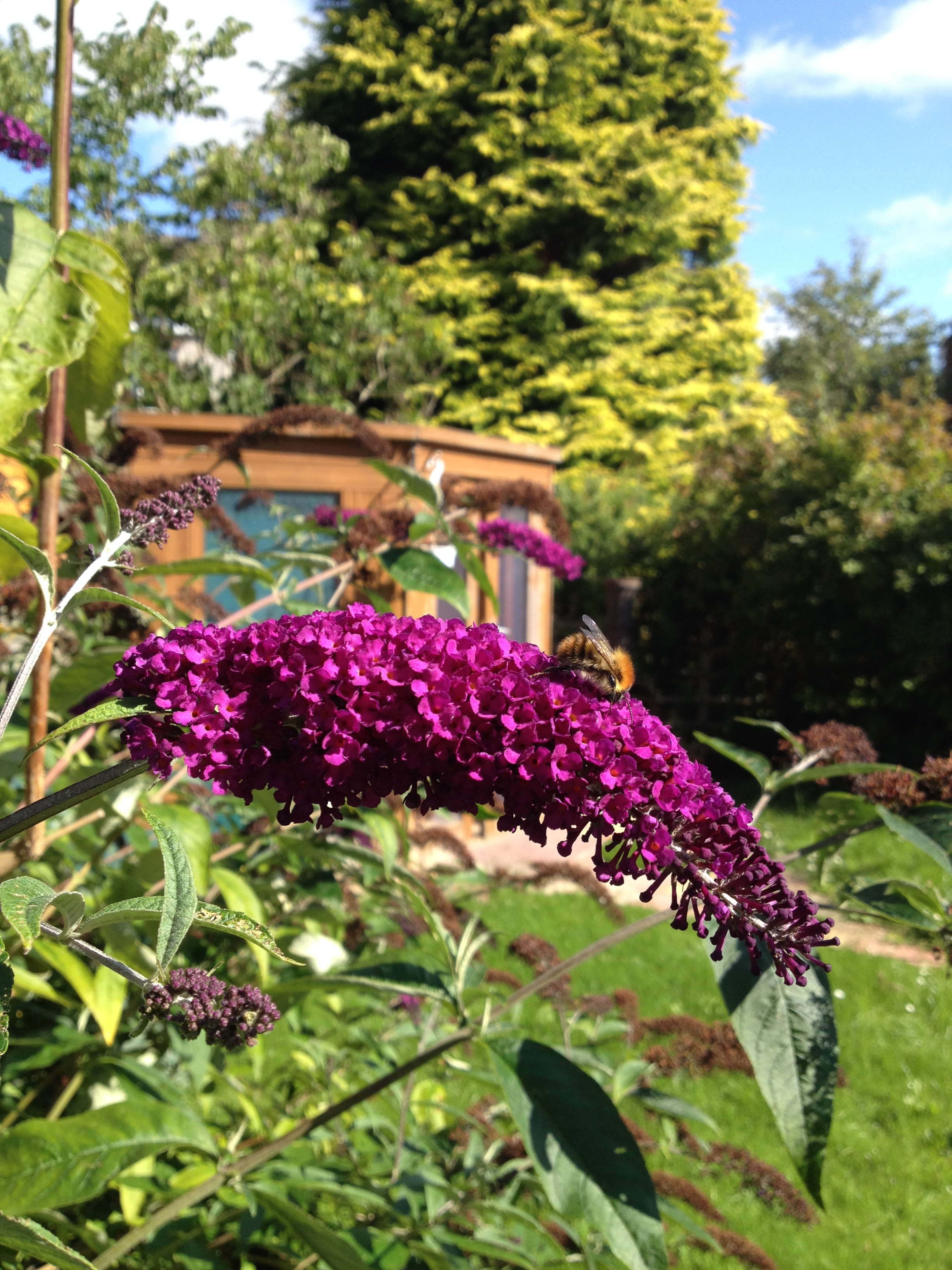
Sunday brought a specific moment of clarity in this. I was exhausted from a busy week and a working weekend and I had a half hour meltdown. Just one of those moments of being overwhelmed and tearful for no one reason that I could put my finger on, but feeling all at sea.004 I came into our little conservatory and sat looking out to the garden. We have a shrub with beautiful purple flowers just outside the window, and the branches were swaying gently in the wind. I looked at the glorious colour, even more radiant in the sunshine, watched as a bee trundled his way around the circumference of the bloom and noticed the contrast of the fir green and sky blue behind this picture.

And peace descended.

In a matter of moments there was calm and a restoration of joy. A simple act of setting my attention on what was lovely had extraordinary impact.

Beauty has a gentle power all of its own. In the midst of a world that can feel dark and dangerous, in the middle of a day that is full of confusion, in a moment that is heartbreakingly empty or impossibly full, taking time to appreciate something that is beautiful can restore some equilibrium.

And so I am making a pledge.

At a time when the loudest voices seem to draw our attention to all that is wrong, I will instead be one who praises that which is excellent. When people draw my attention to the ugly side of life, I will seek out the loveliness. And when I see something that is worthy of praise and admiration, I will call attention to it, draw a crowd around it and together we will take off our shoes and stand on holy ground.